| OUR RATING:
7.6
VERY GOOD
|
TANGIBLES:
|
Why you should buy it: Shadow Dragon is a remake of the original Fire Emblem on the Famicom. It's something you've never played, and if you buy this, we'll get more Fire Emblem games.
Why you should rent it: You think you can beat a strategy RPG in under five days. |
UNIQUE RATING:
SUGGESTION:
Buy It |
Written by: Danreb Victorio | Tags: Fire Emblem: Shadow Dragon, Nintendo DS
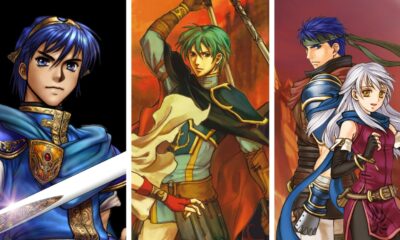
Avid players of Super Smash Bros. should be well aware of the game’s main character, Prince Marth. The story in Fire Emblem: Shadow Dragon follows suit of other games in the series. There’s the main character (Marth) who plays the heir to the royal throne (Archanea), and some unfortunate series of events occurs (his sister gets kidnapped) that forces the main character to go on a journey to save the ones they love and the kingdom while also making new friends that know how to fight along the way.
Again, Shadow Dragon is a remake of the very first Fire Emblem game. For those hardcore Fire Emblem fans that have played the original version, odds are it wasn’t really that great. The reason is because aside from the fact that the graphics weren’t even close to what we have now, basic gameplay elements such as the weapons triangle and terrain effects weren’t even put into play. Since North America has received every game after the seventh release, we’ve become used to the game’s natural conventions.
Shadow Dragon plays just like the rest of the Fire Emblem games. You have a slew of different kinds of units on the map, displayed on a grid surface, both mounted and on-foot. Since this is a DS game, players have the option of playing the game completely with the touch screen and stylus. A common complaint with other DS games in the genre, especially with the ones with an isometric viewpoint, has to do with the difficulty of pointing at tiles behind certain characters. Since all the action takes place from an overhead view, this isn't an issue. Mounted units or characters can move more spaces than ones that aren’t mounted. Each character can also use weapons or items specific to their class. For example, pirates and warriors can only fight with axes, while knights can only fight with lances. Other characters, such as the ones on horses, can use multiple kinds of weapons to add to the game’s strategy.
Each chapter you play in has a specific objective in order to complete the chapter. Some of the more common chapters include simply getting rid of every enemy on the map, or seizing the throne, which normally would require you to defeat the area’s boss surrounding the throne, and having Marth replace him or her on that space to complete the mission.
While at first glance the game may resemble Advance Wars because of the different types of units with different strengths and weaknesses, Fire Emblem is arguably more strategic in the sense that when your units fall from battle—they’re actually dead; you can’t get them back. So if a player liked a certain character more than another, and they will, it’s best to be careful with each.
Then there’s the aforementioned weapons triangle, which is essentially Fire Emblem’s version of the popular “rock-paper-scissors” formula. There are three main weapons in the game; there’s the sword, the lance, and the axe. In Fire Emblem, the swift sword bests the axe, the strength of the axe bests the lance, and the reach of the lance bests the sword. There are exceptions to this rule, however, because of the reaver weapons. For example, swords like the Lancereaver best lances, but at the same time, the weapon’s triangle works in reverse fashion.
In addition to the weapons triangle, there’s also the magic triangle, consisting of dark magic, light magic, and anima. Later entries into the series totally purged this system by making magic rely on element, but the same strategies apply during gameplay in Shadow Dragon.
The coolest feature in Shadow Dragon is the save points put in select areas of every map. Save points are marked by a glowing figure on the ground, and by landing a unit on that particular space, you can choose to save right there and resume at that exact spot at anytime. This is really useful because in every other Fire Emblem game, when making a mistake that costs the player the life of one of his or her units, the player would have to start again from the beginning of the chapter—which really was a pain and sometimes a waste of time. These save points make everything a lot more bearable, and missions become easier to complete.
While the saving feature is a terrific addition, the one feature that is missed is the Support conversations. In previous Fire Emblem games, when you make a character stand adjacent to another character that has similar or extremely different traits, the “Support” option comes up. When choosing that option, dialog is exchanged between the two characters that not only gives more background to those particular characters in the story, it also improves their in-battle performance whenever that character is near someone he or she has a fairly good relationship with. The lack of a Support option in Shadow Dragon lessens what kind of depth the characters had, and it almost makes you not care whether characters die or not—which is definitely one of the most important factors to Fire Emblem fans. The third chapter in the game actually forces you to get rid of a unit because he will be used as a decoy, luckily at that point in the game, nothing really affected the overall story.
The lack of intensive conversations actually highlight the game's main issue. The story in any Fire Emblem relies on the dialog shared between the main character and virtually every character in the game. The problem with Shadow Dragon is that the beginning of each chapter virtually has nothing happen. This is a problem because the game simply throws you out on to the map to plan out your strategy. In previous games, conversations take place before and after every mission, sometimes giving you hints on what can happen on the battlefield. It's unknown whether Intelligent Systems did this to increase the challenge, or whether they found it unnecessary considering this is just a remake. But without the depth in these conversations, it's really tough to enjoy the story.
The other new feature in the game is online play, and it’s actually pretty cool except for one drawback—that being the fact that you can only bring five of your characters into battle. The main reason why players would want to use the game’s Wi-Fi connectivity is the special online shop, where you can equip your characters with online-exclusive items you wouldn’t find anywhere else in the game, and they would definitely help those still working on the main quest.
Since Shadow Dragon marks the series’ first foray onto the DS hardware, chances are plenty of gamers are going to be paying attention to the game’s visuals. For that matter, the graphics are very similar to the GBA games, except with more crispness to the artwork and various animations. Characters in-game have sort of a cel-shaded look that gives the illusion of a slight bevel in order to make them more properly “pop out” of the screen and seem 3D. Intelligent Systems makes great use of the DS' two screens by having all gameplay on the touch screen, and having all the combat information on the top. This allows players to constantly be aware of what's happening on the field, rather than having to cycle through menus upon menus. While the game’s graphics are nothing extraordinary, they simply get the job done.
The game’s sound is also on par with the rest of the series, mainly because it recycles pretty much every tune that the series has previously had. Also, the piercing sounds of critical hits from the GBA version has made its way on to the DS, and although it may seem like an unnecessary reuse, it’s really better than the sounds offered from the console Fire Emblem games.
Fire Emblem: Shadow Dragon doesn’t do much to differentiate itself from the other four Fire Emblem games we already have stateside, but it’s good to know that the series is alive and kicking. The original game has never been released here, and the updates definitely make the game feel fresh. At that, the game still suffers from being the first in the series, but this is actually a reason why newcomers might want to play this one first. All Nintendo fans will take pride in the fact that they can finally experience Marth’s adventure, and it’s a lengthy one that should keep Nintendo's "hardcore" gaming audience busy for quite a while.
| The Falchion weapon from this game acts as the Fire Emblem franchise's symbol in the Super Smash Bros. series. |
| Published by: | Nintendo |
| Developed by: | Intelligent Systems |
| Genre: | Strategy |
| # of Players: | 1-2 |
| ESRB Rating: | Everyone 10+ |
| Release Date: | US: February 17th, 2009 |